Electrical insulation
Custom films, papers and barriers can be profiled for defined separation, fastener clearance and assembly geometry.
Industry application
Custom insulation, thermal interface, foam and adhesive components for the defined interfaces and mechanical constraints inside power assemblies.
Start with the drawing, part function and approved material requirement.
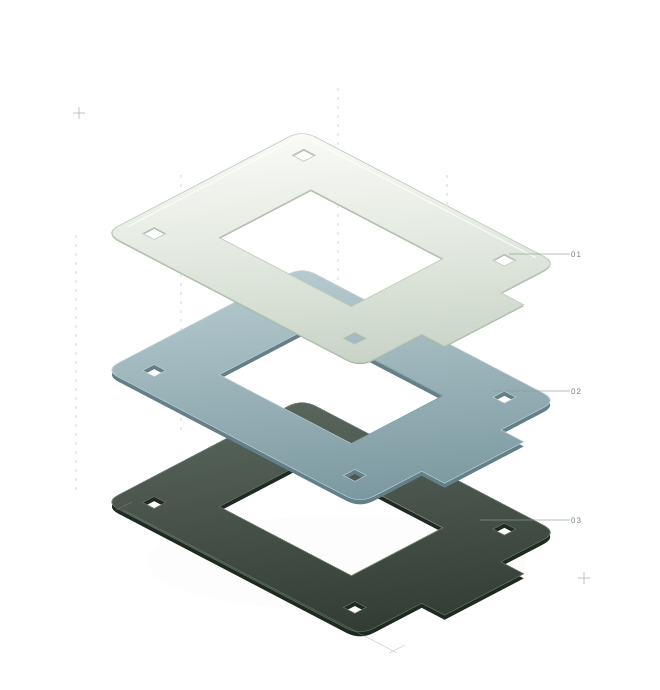
Application context
Power electronics assemblies often combine conductive elements, thermal interfaces, housings and mounting features in limited space. Functional components are usually specified to create separation, match a defined interface, protect surfaces or simplify assembly.
Rilbeck supports drawing-led conversion of the specified component. The electrical, thermal and material performance requirements remain those defined by your engineering and approved material documentation.
Component considerations
A useful request distinguishes the part function,
material requirement and critical geometry.
Custom films, papers and barriers can be profiled for defined separation, fastener clearance and assembly geometry.
Thermal materials can be converted to the required outline, thickness and openings when an approved material is specified.
Foam, gasket and adhesive profiles can support mounting, protection, sealing or assembly positioning requirements.
Related components